


This site uses cookies – Learn more.
Dogwood Highlights
Dogwood Highlights


Dogwood Lawn has always been difficult to maintain due to its intensive shade cover. In 2019, the horticulture team decided to lean into the lawn’s unique nature by replacing the turf with various native ground covers that require minimal sun and care. During the pandemic, the team doubled down, giving the space entirely over to nature as a “No Mow Lawn.” It naturally seeded with both native and weed species among the ground covers.
Over the past two years the horticulture staff have made this a native plant oasis. This was a primary relocation site for many of the plants from Lily Kwong’s 2025 installation, Gardens of Renewal. Not only did these plants establish but they’ve begun to thrive over the past year. In addition, over 500 plugs were planted from Pinelands Nursery in partnership with the Xerces society to continue to increase the biodiversity of this garden. Madison Square Park Conservancy is committed to sustainable land management and the reintroduction of species that were indigenous to Lenapehoking, the homeland of the Lenape people, many which have not been seen in the park for generations.
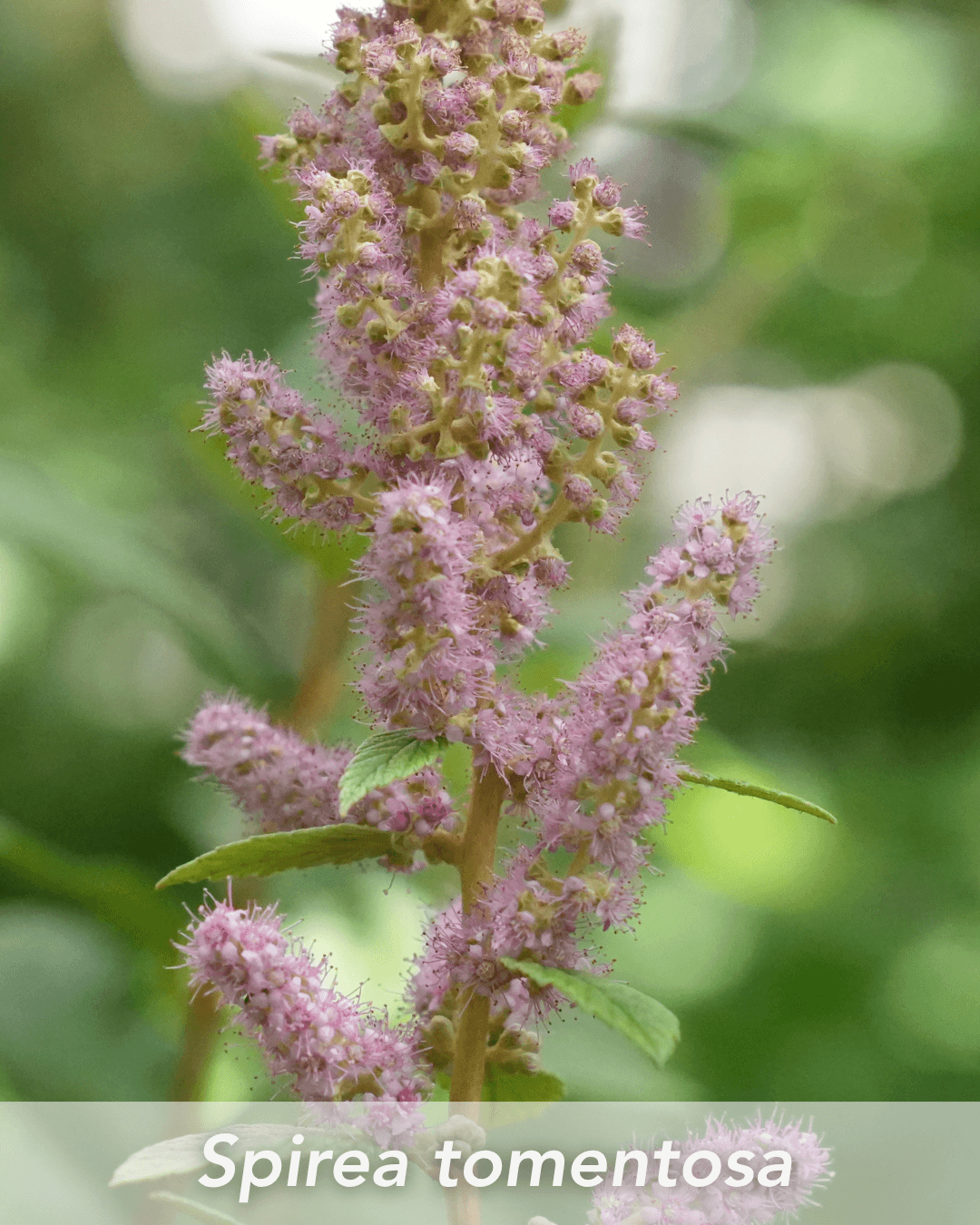
Some highlights include Hardhack (Spirea tomentosa) commonly seen along hiking trails and in woodland areas, situated among the reeds, in swampy areas and in the margins of ponds and lakes. Easy on the eyes, this plant has pale pink steeple-like fluffy flowers that open in June, and the bees absolutely love it. This plant is also the larval host for the Columbia Silk Moth (Hyalophora columbia).
We have two species of Lobelia represented in this garden, Cardinal Flower (Lobelia cardinalis) and Blue Cardinal Flower (Lobelia siphilitica). Both species prefer moist soil and tolerate part shade. It will self seed in optimal conditions creating dense colonies. You may find these plants growing along streams, sloughs, springs, swamps, meadows and in low wooded areas, both providing a wonderful pop of color in late summer, a brilliant red and a softer bluish purple. These primary colors amongst the soon-to-bloom Goldenrod (Solidago spp.), create a stunning display for the beginning of autumn. The genus name, Lobelia, honors Matthias de l’Obel (1538-1616), French physician and botanist, who with Pierre Pena wrote Stirpium Adversaria Nova (1570) which detailed a new plant classification system based upon leaves. Both plants are highly attractive to butterflies, bees, humming birds, and a number of other pollinators.
Swamp rose mallow (Hibiscus moscheutos), a transplant from Lily Kwong’s Gardens of Renewal installation last spring, has just begun to bloom for us. Soft, pale pink flowers almost as big as your hand stand on sturdy stems. Another swamp loving perennial, these plants do best when they aren’t allowed to dry out. Given optimal growing conditions, they can form into shrubs and bloom well into September. The flowers only last 1-2 days but rapidly re-produce on mature plants which can produce a showy 20 blooms a day!
New York Ironweed (Vernonia noveboracensis) is as showy and stunning as the state it’s named after. Dark purple flowers create dense colonies when allowed to establish. Important for native bees, these plants provide important nesting habitat in their dead stems. Madison Square Park’s perennial cutbacks are delayed until the spring in support of pollinators. The Denticulate Longhorn Bee (Melissodes denticulatus) is incredibly particular about what pollen it will collect depending on New York Ironweed when it begins to bloom in mid August.
Swamp Milkweed (Asclepia incarnata) is a tall and beautiful perennial. They can grow up to 5ft and bloom small, usually pink or purple, flowers that cluster at the top of the stem. Its leaves are small and pointed as the plant grows up to reach the sun. The cluster nature of the flowers make a nice show and attract pollinators such as butterflies and hummingbirds. Plants in the Asclepias genus are host plants for the endangered Danaus plexippus, the Monarch Caterpillar, providing food and support to this beautiful butterfly. We were lucky enough to see this caterpillar in action at the garden this summer too!
Black-eyed Susan (Rudbeckia hirta) is a bright yellow daisy-like flower with dark centers that can be seen atop a 1-2 foot hairy stem. These plants will grow under partial sun but they prefer direct sunlight. This species is a prolific seeder but typically a short-lived perennial. When left to grow through the winter months, the dried seed heads of this plant make for an important food source for birds such as cardinals and sparrows. The black-eyed susan is also the host plant to the Emerald Moth and Silvery Checkerspot Butterfly. They are strong plants that can become competitive and aggressive given the perfect conditions.


