


This site uses cookies – Learn more.
MSPC’s Aquatic Garden
MSPC’s Aquatic Garden
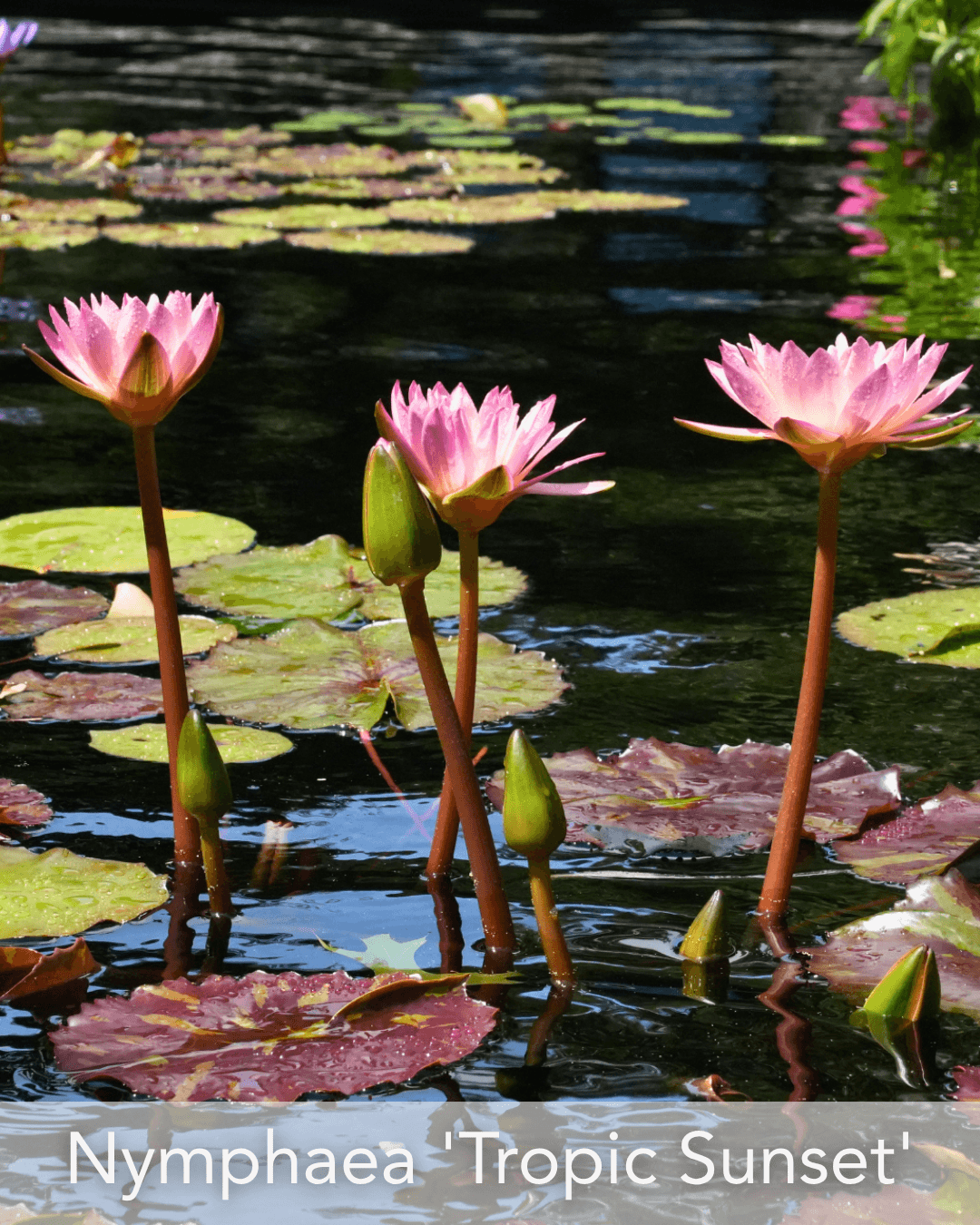


Have you had a chance to visit the Reflecting Pool at Madison Square Park this summer? This season the garden not only features colorful tropical water lilies, but perennials native to New York’s wetlands and shores. The horticulture team gains valuable experience with aquatic plants with each seasonal install while providing habitat for dragonflies throughout the summer. This season, our horticulture summer intern Lilly Eidelberg-Cardoza was tasked with this garden’s maintenance. Keep reading for her reflection on her experience!
While most of our water lilies on display are tropical, the horticulture team was intentional in including more native plants this summer. In particular, it hosted the native water lily, Nymphaea ordorata. This showy member of the water lily family (Nymphaeaceae) is a beautiful plant to admire as you paddle a canoe around a lake or down a sluggish stream in the North Eastern United States. The large white flowers are often fragrant, hence the specific epithet “odorata”. “Nymphaea” derives from the attractive flowers, which are suggestive of the mythological Greek nymphs, beautiful supernatural female beings thought to inhabit glades and springs. This plant is generally found in quiet water up to 5 or 6 feet deep and is adapted to its aquatic habitat. The stout rhizomes are spongy with hollow spaces for storing oxygen that is transported down the stems from the leaves. White water lily flowers are open during the daytime for three days.
On the first day, the petals are not fully open and thus form a cup-like structure filled with a fluid containing sugars. The female flower structure, the stigma, is receptive to pollen only on the first day, and each flower does not produce its own pollen until the second and third days, thus preventing self-fertilization. On the first day of flowering, beetles and bees enter the flower and often fall into the fluid, which washes off pollen onto the stigma and fertilizes the flower. On the second and third days, no fluid is produced, and the flowers open wide. Insects that land on the flower on these days get covered with pollen and transport it to flowers that are just opening and hence receptive to pollination. On the fourth day, the whole structure is pulled underwater, where the seeds mature. Waterfall and currents disperse the seeds.
While its population is secure in the Northeast US and it has actually become invasive in other parts of the country, and populations in Canada are imperiled due to threats to its habitat including siltation of backwater lakes, cottage development, shoreline development, logging, wild rice harvesting, changes to hydrology, wetland drainage, increasing numbers of beavers which eat the rhizomes, herbicide, and pollution from runoff.
Everyone knows a cat-tail when they see it. Long reed like stems and brown flower heads, Typha latifolia can be found in most wetland environments in the Northeast. By its creeping rootstocks, this typical marsh perennial forms dense stands in shallow water and provides a favorable habitat for red-winged blackbirds, as well as other marsh birds, and muskrats. The latter can cause extensive “eat outs,” creating areas of open water in the marsh. The rootstock is mostly starch and edible; it was ground into meal by Native Americans, and the early colonists also used it for food. The young shoots can be eaten like asparagus, the immature flower spikes can be boiled and eaten like corn on the cob, and the sprouts at the tip of the rootstock can be used in salads or boiled and served as greens.
Cattails are considered a sign of a transitional environment because they grow where land is changing from a wet to dry habitat. Creating dense monocultures, their aggressive behavior often requires management much like weeds. Cattails occur in freshwater wetlands, from sea level to 7,000 ft, usually in water not greater than 8″ deep. They can also survive in constantly damp soil without standing water. Where most plants are concerned with getting enough water, cattails face the unusual challenge of getting enough oxygen. This plant has creatively evolved leaves with large air vessels that transfer the needed oxygen to the submerged rhizome.
Madison Square Park Conservancy has partnered with the Lotus Garden, a volunteer-run community garden on the upper west side that also cares for an aquatic garden. Given the seasonal temporary nature of our aquatic garden here, this partnership ensures that the perennial plants have a home at the end of the season.
Lilly’s experience with this garden and maintenance:
If your morning routine includes passing by the Reflecting Pool during the week you have probably seen me circling the water with a big pole and net. A lot of passersby assume there are animals swimming around, but the only animals present are our flying friends like dragonflies, bees, and butterflies. We have landing pads for them made out of wood stumps and branches from the park, so they keep visiting! I spend most of my mornings at the garden cleaning and maintaining the water which prevents major algae blooms and biofilm accumulation. This kind of maintenance gives the aquatic plants an overall suitable environment to grow in.
It has been a very satisfying and joyous experience to be a part of installing our aquatic plants and providing their seasonal care throughout the summer. Some of my best days in the garden are witnessing a new water lily bloom. I have waded in the pool to prune, fertilize, and of course, take a sneaky sniff of the beautiful blooms, which smell amazing. I have grown very attached to this project – especially to my namesake plants – but one of my favorite aspects of the Reflecting Pool is seeing all the reactions to our rubber duck friends, who proudly watch over the plants and even enjoy a little picnic too, thanks to rubber duck donations from Horticulture Associate Gabriel Cepeda and Horticulture volunteer Lynn Stefanelli!


