


This site uses cookies – Learn more.
Konnichiwa Sakura
Konnichiwa Sakura
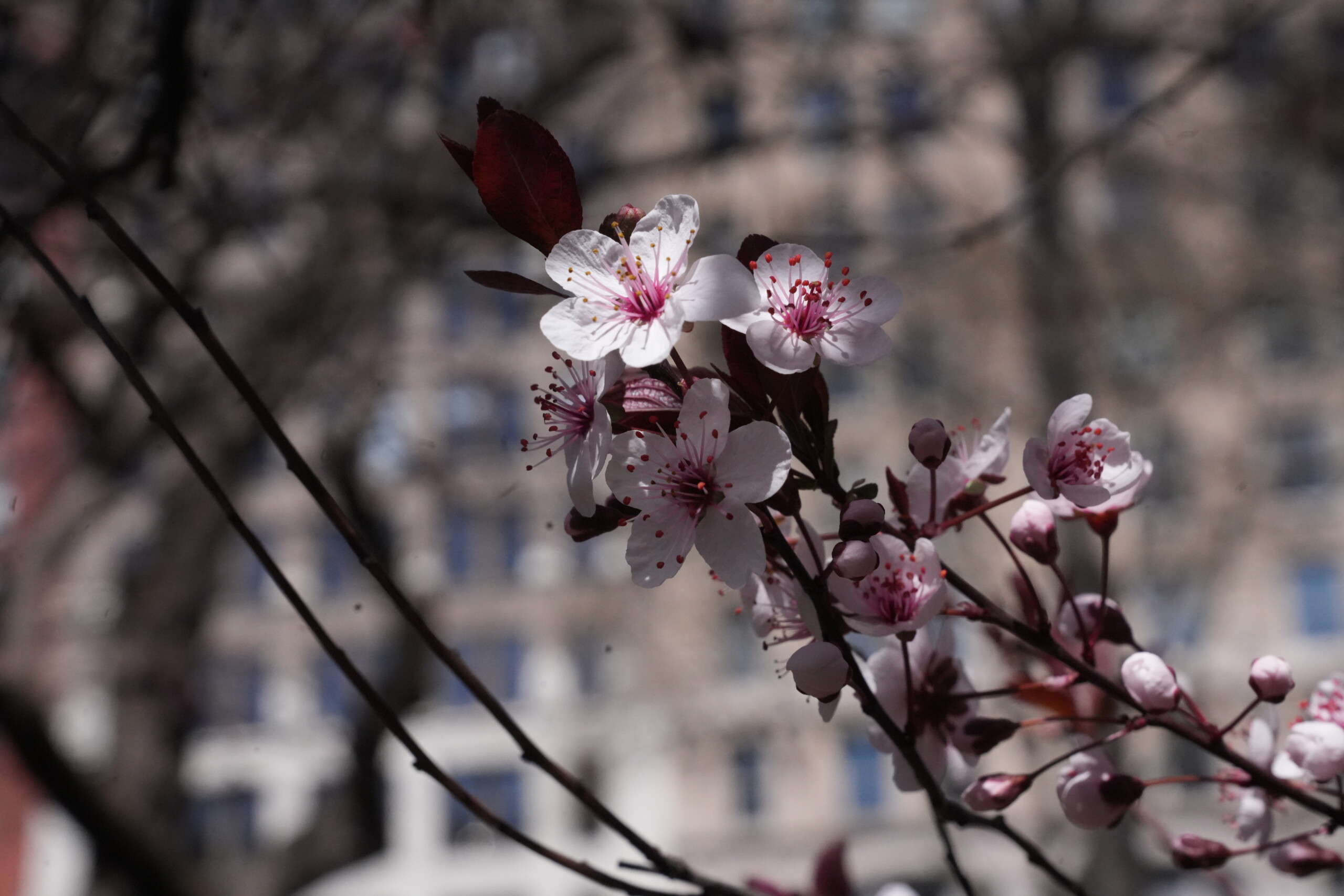


When you think of spring flowers, what’s the first thing that comes to mind? Maybe it’s tulips, daffodils, peonies, or hyacinths but there is one species of a flowering tree that is iconic. It has its own festival, it is celebrated internationally, and it has even described the honorable length of life for samurai: the sakura (Prunus serrulata), commonly known as the Japanese cherry tree. With its abundance of beautiful flowers, the blooms mark the beginning of spring, bringing life to nature in hibernation.
The origin of the sakura goes back to the Himalayan region in Asia, thousands of years before civilization recorded its history. While not exclusive to Japan, it was during the Heian period (794-1185) that the first ever Hanami celebration officially began. This ceremony, also known as “flower viewing,” is the act of gazing upon the flowers. People gather under these trees to be one with sakura, partaking in picnics, feasts, singing, and drinking. The night time celebration, called Yozakura, has a tradition where paper lanterns are hung from the tree itself. It’s another reminder of how nature brings us together.
Similar to life itself, the cherry blossoms come and go, but it is not without meaning. Each new season of these flowers signifies new beginnings and rebirth. Sakura embraces the natural cycle of life and death with every petal that blooms and falls. In Japan, the lives of samurai were often short due to following the Bushido code, but they made every breath count, knowing each day could be their last. Being in the present frees us from the shackles of time because we have the freedom to tailor how we experience life.
Sakura made its debut in the United States around 1880 but remained relatively rare. It wasn’t until botanist David Fairchild brought back several specimens from Japan and through the petitioning of Eliza Scidmore to First Lady Helen Taft that they were truly embraced. Wanting to display amiable sentiment to its sister capital city in the United States, the city of Tokyo, Japan gifted them a shipment of young trees. Unfortunately upon arrival, the trees were discovered to have been so severely pruned and infested with insects and gall that they were not suitable for planting, resulting in a profound diplomatic challenge. The Mayor of Tokyo had deep regret for the condition of the trees and petitioned the Japanese government, who quickly went to rectify the issue by selecting 3,000 young healthy trees in 1910. Many of these trees are still part of the National Cherry Blossom Festival to this day. Despite being a sensitive political blunder, this occurrence was a valuable lesson in the United States, influencing the establishment of the first ever pest monitoring system for the transport of live, imported plants. By 1915, the United States returned the symbol of friendship by sending 50 flowering dogwood trees (Cornus florida), a tradition that continues presently.
Fortunately, you do not have to travel all the way to Washington D.C. to partake in Hanami. Here at Madison Square Park, we have many cherry blossoms, including the most common cherry of all, the Yoshino cherry (Prunus × yedoensis). The one to win the race of flowering first is Plum blossom (Prunus mume). We also have Kwanzan cherry (Prunus serrulata ‘Kwanzan’), known for its double flowers, and the purple-leaf sand cherry (Prunus × cistena), which have tiny clusters of flowers. Where can you find these sakura in our park? Here’s a hint: we have a lawn named after the blossoms. If you are unable to make it in person, Hanami is also celebrated by drinking sake or traditional Japanese tea, such as matcha green tea.
Did you know that the flowers and other parts of the cherry tree are used both for culinary and medicinal purposes? Leaves and flowers are pickled in salt and vinegar to bring out its aromatic properties. They can be brewed for tea, wrapped to make mochi, or used in cakes. Their fruits can also be eaten but don’t expect something sweet. You may already be using products that are infused with sakura, such as moisturizers, masks, or cleansing oils. Its anti-inflammatory effects treat skin conditions, coughs, and digestive issues. Perhaps, next time you have a cold, try cherry tree tea.
Flowers evoke something biological within us and that is called hope. With its abundance of pink colors painting over a gloomy sea of gray, the view is a living masterpiece of art. There is beauty in this world, no matter how dark or chaotic it may currently be. Whether it’s from this tree or the flower of another plant, practice gratitude and take the time to appreciate what nature has given us.


